
In modern manufacturing, production logistics, as an important link connecting raw material supply, manufacturing process, and product delivery, has a direct impact on the production efficiency, cost control, and market response ability of enterprises. The smooth connection of production logistics is not only the basis for the collaborative operation of various internal links of enterprises but also the key to achieving lean production and intelligent manufacturing.
One, The Importance of Production Logistics Connection
Production logistics covers the whole process from raw material procurement, warehousing management, production processing, semi-finished product circulation to finished product inventory. In this chain, any disconnection in any link can lead to production interruption, inventory accumulation, or delivery delay. Therefore, strengthening the connection between links can effectively improve resource utilization, reduce inventory costs, and enhance the ability of enterprises to respond to market changes.
 wo, Key Elements for Achieving Seamless Connection of Production Logistics
 . Information System Support
By introducing information tools such as ERP (Enterprise Resource Planning), MES (Manufacturing Execution System), and WMS (Warehouse Management System), real-time sharing and dynamic adjustment of production plans, material requirements, and inventory status can be achieved. These systems can help enterprises accurately predict material requirements and reasonably arrange production rhythm, thus avoiding material shortages or surpluses.
2. Process Standardization and Automation
Standardized logistics processes can reduce human intervention and improve operational efficiency. For example, through automated vertical warehouses and AGV (Automated Guided Vehicles), material automatic distribution and circulation can be realized, reducing transportation time and error rates.
3. Supply Chain Collaboration Management
Enterprises should establish a close cooperative relationship with suppliers, adopt JIT (Just-In-Time) or VMI (Vendor Managed Inventory) models, and ensure timely supply of raw materials. At the same time, they should also maintain communication with the sales and marketing departments, adjust production plans according to market demand, and avoid blind production.
4. Data-driven Decision Making
By using big data and Internet of Things technology, collect and analyze various data in the logistics process, timely discover bottleneck links, and optimize resource allocation. For example, by analyzing indicators such as equipment utilization rate and material turnover rate, the overall logistics efficiency can be improved.
 hree, Challenges and Response Strategies
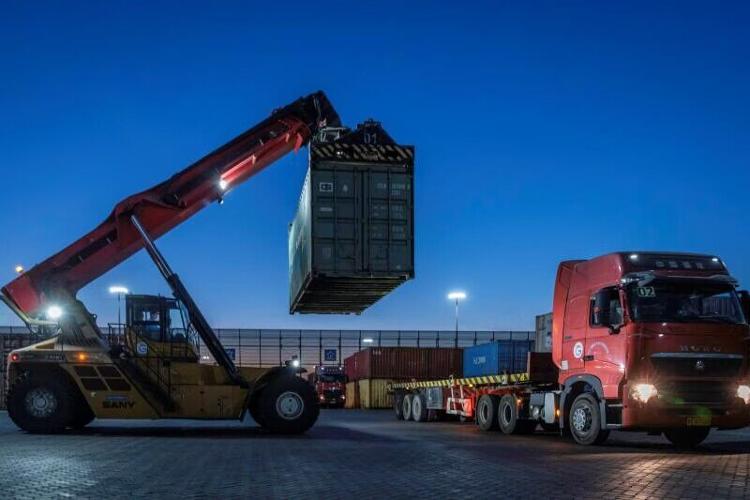 Although modern technology provides strong support for the connection of production logistics, there are still challenges in actual operation, such as the difficulty of system integration, the difficulty in changing employee operational habits, and the poor inter-departmental collaboration. In this regard, enterprises can gradually improve by strengthening employee training, promoting organizational process reconstruction, and introducing professional consulting teams.
Four, Conclusion
In summary, the effective connection of production logistics is an important means to enhance the comprehensive competitiveness of enterprises. Only by combining informatization, automation, standardization, and collaboration can an efficient and flexible logistics system be constructed, helping enterprises maintain a competitive edge in the fierce market competition. In the future, with the continuous advancement of Industry 4.0 and intelligent manufacturing, the connection methods of production logistics will also become more intelligent and efficient, providing solid support for the transformation and upgrading of the manufacturing industry.
Prev:How to connect multimodal transportation
Next:How to continuously improve

